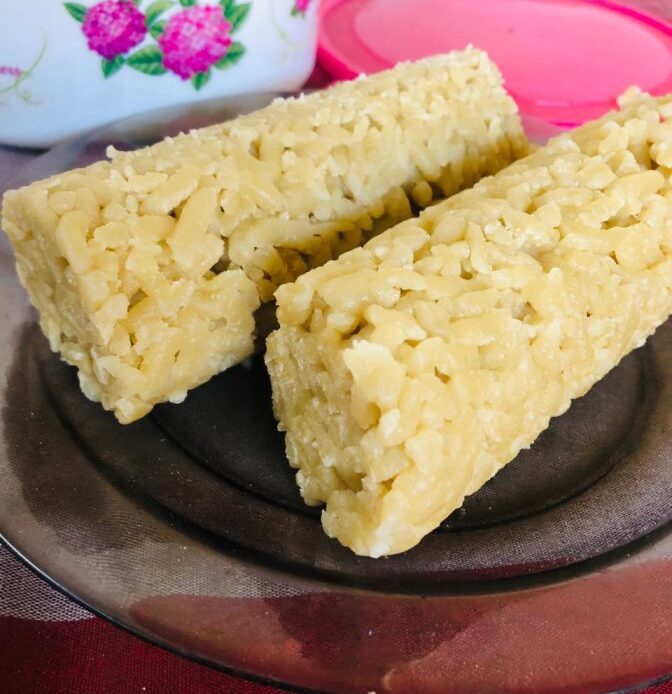
This is one of my favorite Sri Lankan comfort meals, and I made it again after a long time. It’s simple to prepare, filling, budget-friendly, and tastes especially good with a spicy curry.
It is usually served with spicy curries, sambol, coconut milk, or even a sweet banana mixture. I personally enjoy it most with a thick egg, chicken, or fish curry.
When I was younger, I used to eat it with coconut milk, sugar, and banana. If you prefer a sweet version, you can try it this way too — it’s especially good for kids who don’t like spicy food.
If you enjoy traditional Sri Lankan food, you can also try my Sri Lankan chicken curry recipe or homemade fish curry, which pair really well with this dish.
🍚 What Is Mani Pittu?
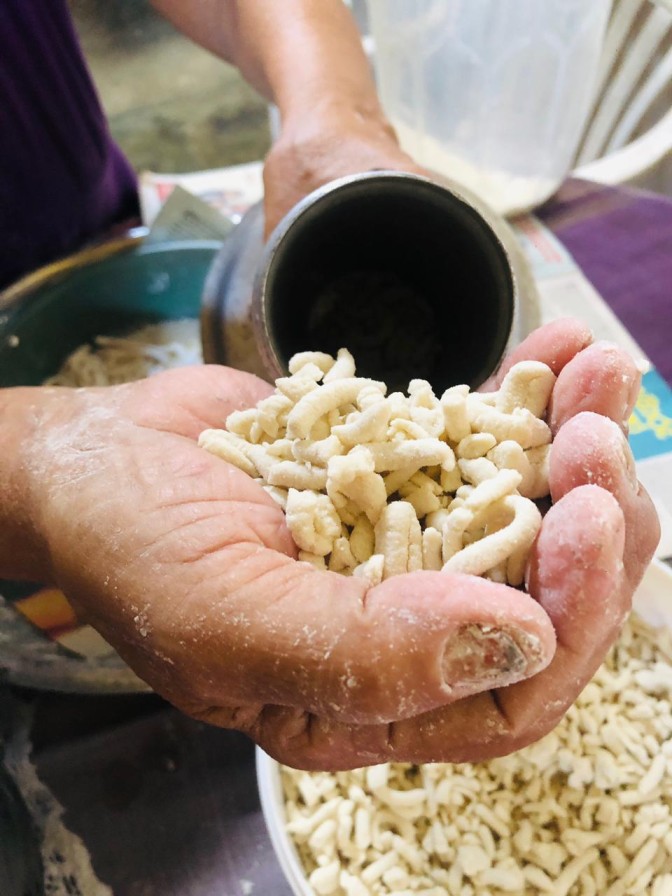
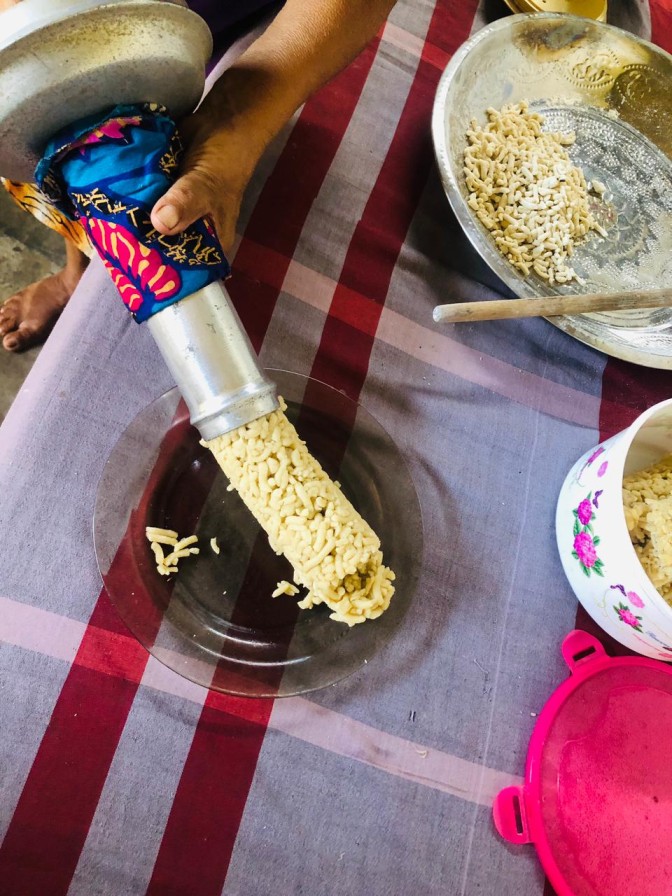
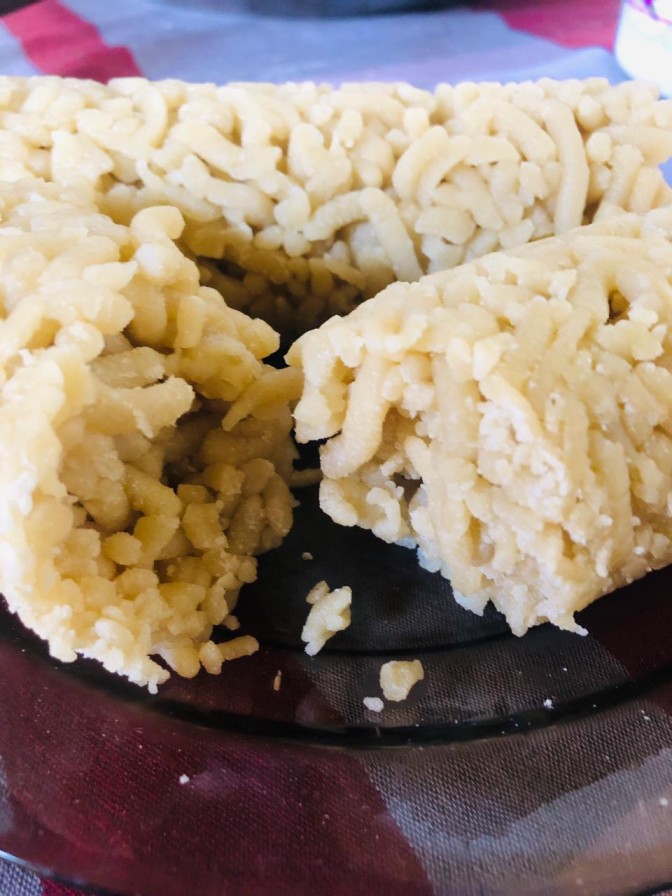
Mani pittu is a Sri Lankan steamed flour dish with a light, loose texture that absorbs curry beautifully. Unlike regular cylindrical pittu, it is made by pressing flour dough through a string hopper mould into small pieces before steaming.
Different families make it using wheat flour, rice flour, or kurakkan flour depending on what they prefer at home.
🌾 Types of Pittu
There are several popular variations of pittu enjoyed across Sri Lanka, including:
- Wheat pittu
- Kurakkan pittu
- Sweet potato pittu
- Red rice pittu
- Manioc pittu
These are just a few examples. Some of these are my own ideas as well. I’ll be sharing more recipes in the future.
Ingredients for Mani Pittu
- Flour (wheat flour, rice flour, or kurakkan flour — your choice)
- A little salt
- Some coconut milk
- Warm water
How to Make Mani Pittu
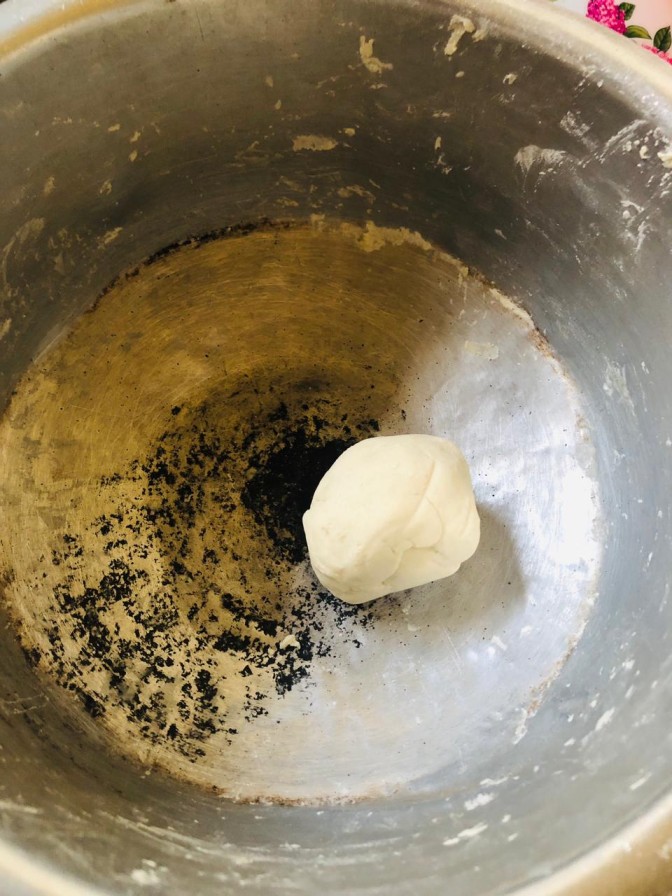
- Lightly roast the flour until you get a nice aroma.
- Do this on low heat and don’t let the color change too much.
- From my experience, roasted flour gives a better taste than steamed flour.
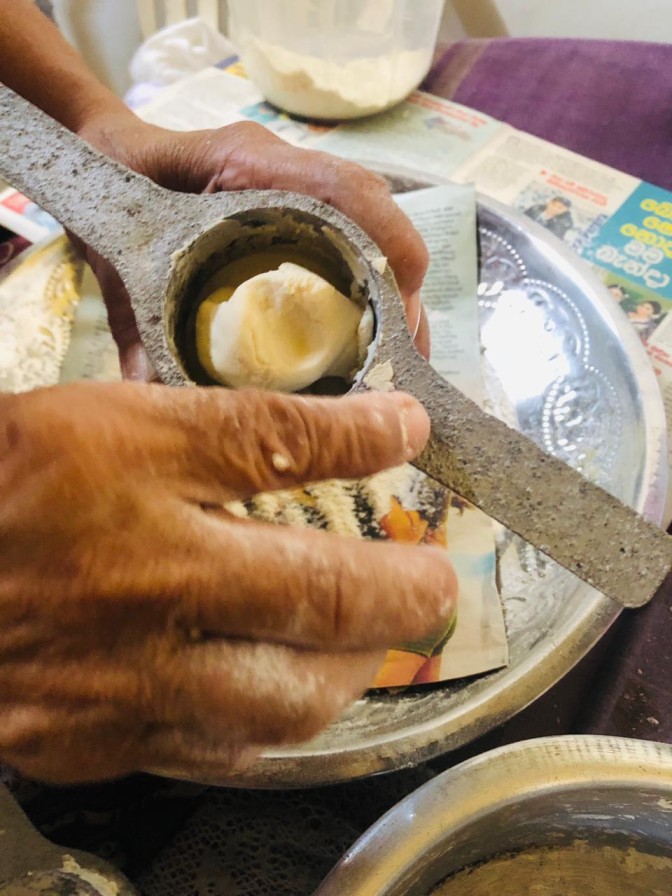
- Add salt to the flour and mix with warm water until it reaches a texture similar to string hopper dough — not sticky to the hand.
- Spread the mixture on a banana leaf or parchment paper.
- Use a string hopper maker with slightly larger holes and press it out in long lines instead of round shapes.
- That makes it easier.
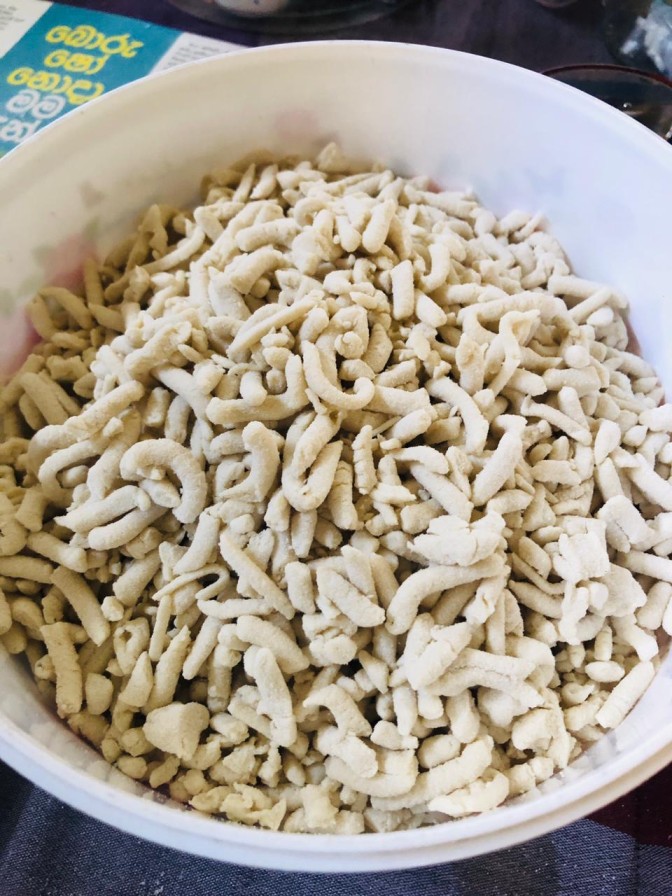
- Sprinkle some flour on top again and gently break it into small pieces using a spoon handle.
- Don’t make the pieces too small.
- Use a sieve to remove excess flour.
- During this process, the pittu pieces will form nicely.
- Add the pieces into a pittu steamer and steam for about 15 minutes.
- At this stage, you can add a little thick coconut milk so it spreads evenly and helps maintain a tender texture.
Flour Options
This pittu can be prepared using wheat flour, rice flour, or kurakkan flour. Kurakkan flour usually gives a slightly earthier flavor and more fiber compared to wheat flour.
🍛 Best Curries to Serve With It
This dish tastes best with rich, flavorful curries and spicy side dishes. Some of my favorite combinations are:
- Thick egg curry
- Sri Lankan fish curry
- Chicken curry with coconut milk
- Simple dhal curry
- Coconut sambol or spicy lunu miris
- Sweet version with banana, sugar, and coconut milk
❤️ My Experience With Mani Pittu
Traditionally, this dish doesn’t include coconut, but I like to add a little coconut to the mixture because it gives a lighter texture and a richer taste. Most people use wheat flour, but I used rice flour this time.
💡 Tips for Perfect Mani Pittu
- If you roast the flour, mix it with warm water
- If you don’t have a pittu steamer, a regular steamer works too
- Don’t over-roast the flour
- Don’t add too much water when mixing
- When shaping, sprinkle flour before and after to prevent sticking
- Don’t make the pieces too big or too small
- Leftover pittu can be stored in the fridge for 1–2 days and lightly steamed again before serving
From my experience, small details like this make a big difference in texture and taste.
Common Mistakes
- Adding too much water when mixing the flour
- Over-roasting the flour — it can become slightly bitter
- Making the pieces too small or too large
- Not steaming long enough
- Adding too much coconut milk at once
Conclusion
Mani pittu is one of those simple Sri Lankan meals that feels both comforting and satisfying, especially with a spicy curry on the side. Whether you serve it with sambol, coconut milk, or a spicy curry, it’s a comforting Sri Lankan dish worth trying at home.
FAQ
- How to make mani pittu soft?
To make pittu soft, make sure not to add too much water when mixing the flour. Also, steaming it properly with coconut milk helps keep it soft.
- Can I store pittu in the fridge?
Yes, you can store pittu in the fridge for 1–2 days. Before eating, steam it again or heat it lightly to bring back the softness.
- Can I use rice flour instead of wheat flour?
Yes, you can use rice flour, kurakkan flour, or wheat flour depending on your preference.
Did you enjoy this recipe?
If you enjoyed this recipe, don’t forget to rate it ⭐ and share your experience!