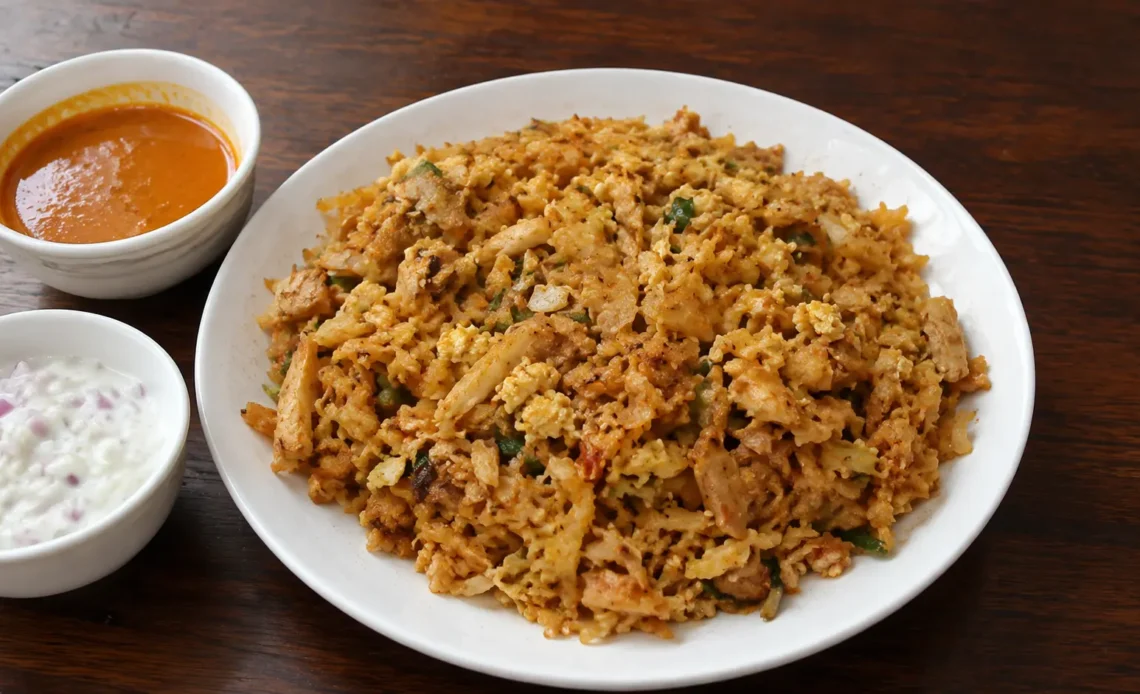
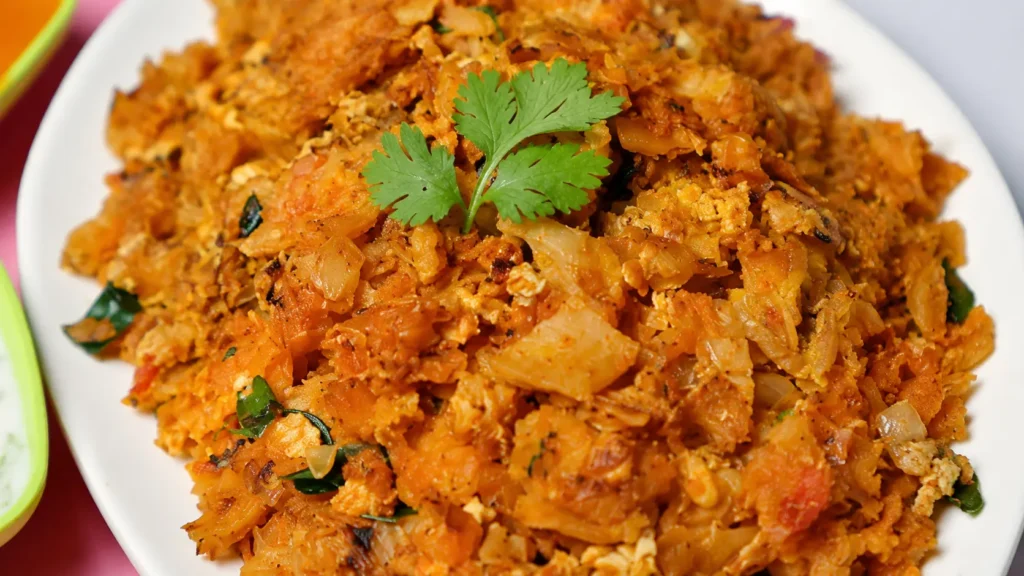
Chicken Kottu is one of the most loved street foods in Sri Lanka — not only by locals, but also by many tourists who visit the country. From cheesy kottu to egg kottu and string hopper kottu, there are so many different versions, but homemade chicken kottu always has a special taste of its own ❤️
Today I’m sharing an easy homemade chicken kottu recipe that tastes even better than some restaurant versions, made without artificial flavoring and using simple ingredients you can adjust to your liking.
From my experience, frying the chicken separately before adding it to the kottu gives a much richer flavor and better texture.
If you enjoy homemade Sri Lankan comfort food like this, you might also like my Homemade Ginger Beer Recipe as a refreshing drink to serve on the side.
⏱️ Quick Details
- Prep Time: 30 minutes
- Cook Time: 20 minutes
- Serves: 3–4
🧾 Ingredients for Godamba Roti
- 300g all-purpose flour
- 2 tbsp coconut oil
- Salt to taste
- Lukewarm water as needed
🧾 Ingredients for Chicken Kottu
- 1 carrot (thinly sliced)
- A few leek leaves (thinly sliced)
- 3 green chilies (sliced)
- 1 onion (chopped)
- 3–4 garlic cloves (crushed)
- A few curry leaves
- 2 eggs
- Fried chicken pieces
- 3–4 tbsp chicken curry gravy
- Salt to taste
- 1½ tbsp chili flakes
- 1 tbsp black pepper
- ¼ tsp turmeric powder
- A little chili powder (optional)
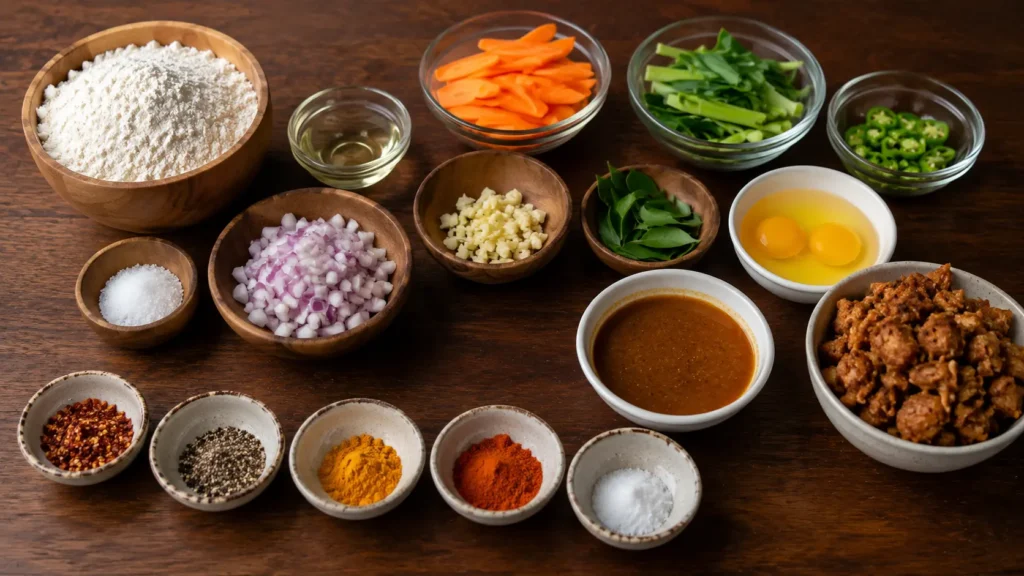
You can also use leftover chicken curry for this recipe. Just fry the chicken pieces slightly before adding them to the kottu.
🌍 Ingredient Notes & Easy Substitutions
• Godamba roti can be replaced with frozen paratha or thin flatbread if unavailable.
• Curry leaves add authentic Sri Lankan flavor, but you can still make the recipe without them.
• Leeks can be replaced with cabbage or spring onions.
• If Sri Lankan chili flakes are too spicy, reduce the amount based on your preference.
• Leftover chicken curry also works really well for homemade chicken kottu.
A question I often get is whether you can make kottu without godamba roti. Yes — frozen paratha or thin flatbread works really well as a substitute.
👩🍳 How to Make Godamba Roti
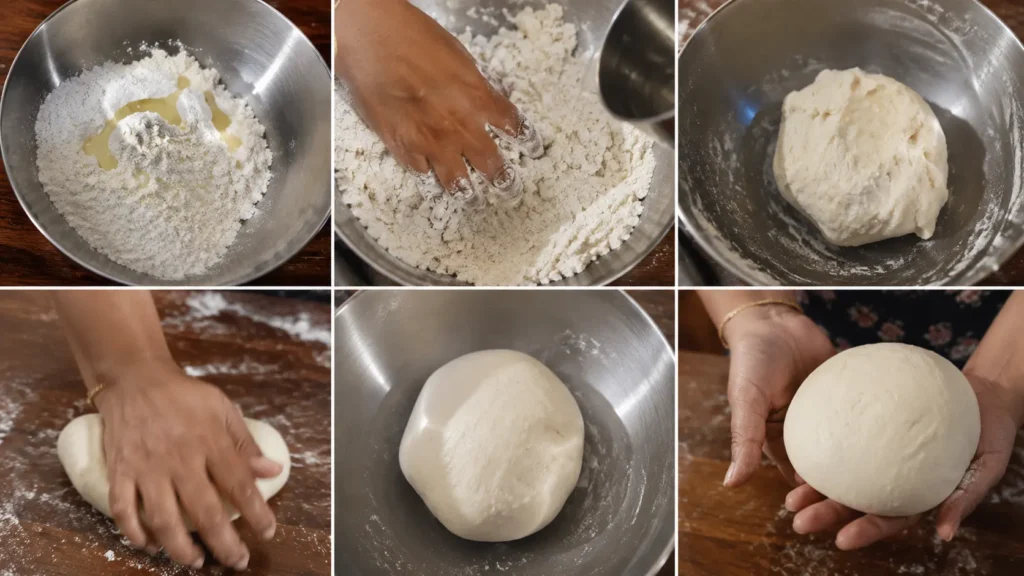
🥣 Step 1 – Prepare the Dough
Add flour, salt, and coconut oil into a bowl.
Slowly pour in lukewarm water and mix until you get a soft dough that does not stick to your hands.
Knead the dough well for another 2 minutes until smooth.
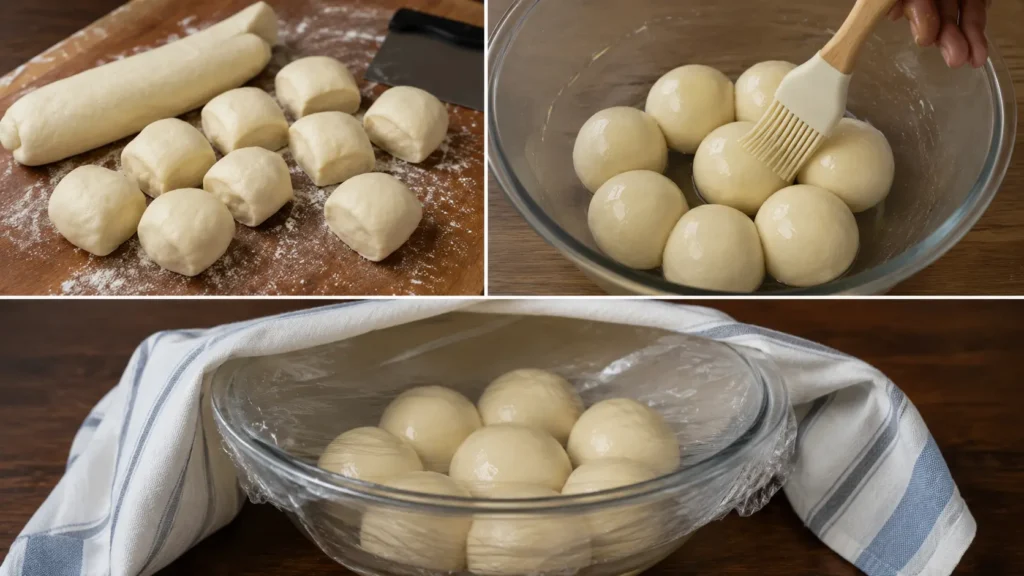
🍞 Step 2 – Rest the Dough
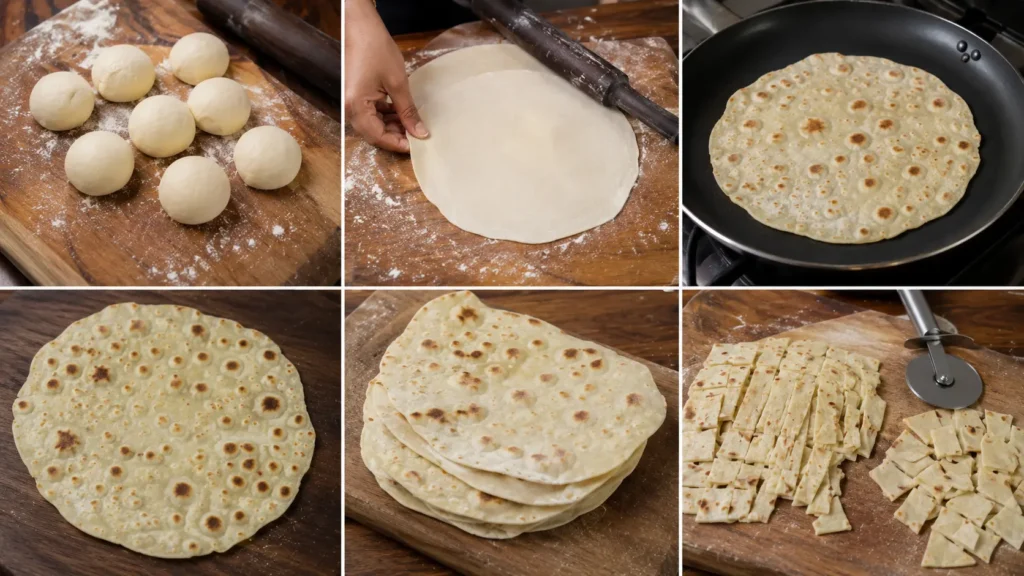
Divide the dough into small balls.
Place them in a lightly oiled bowl and brush a little oil over the top.
Cover and let them rest for about 15–20 minutes.
🔥 Step 3 – Cook the Roti
Flatten each dough ball very thin using your hands or a rolling pin.
Heat a non-stick pan and cook both sides until lightly golden.
You can lightly grease the pan if needed.
Once cooled slightly, cut the roti into small square or thin strips.
🍳 How to Make Chicken Kottu
🧄 Step 4 – Prepare the Base
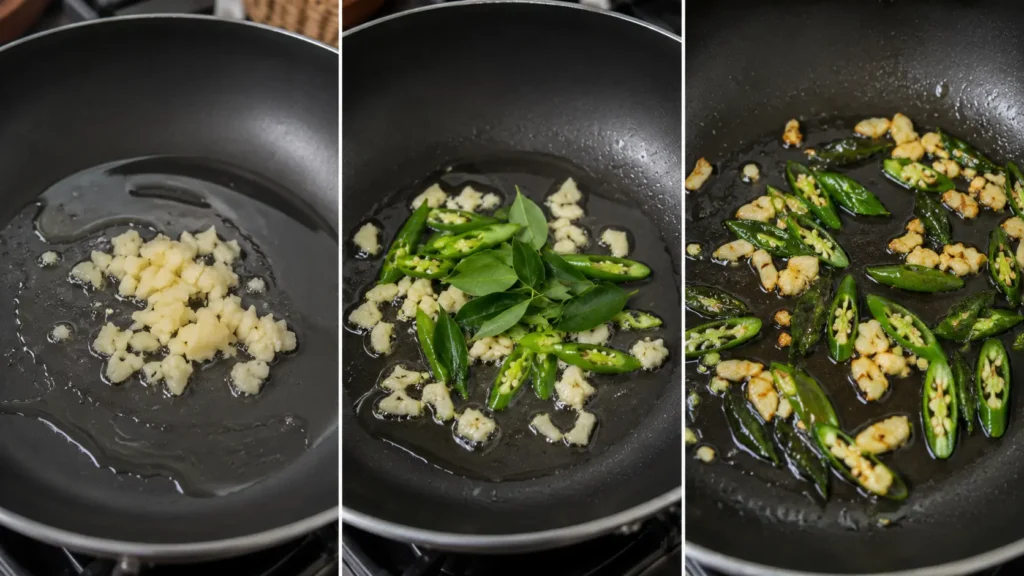
Heat a little oil in a pan.
Add crushed garlic, curry leaves, and green chilies.
Sauté for about 1–2 minutes until fragrant.
🥕 Step 5 – Add the Vegetables
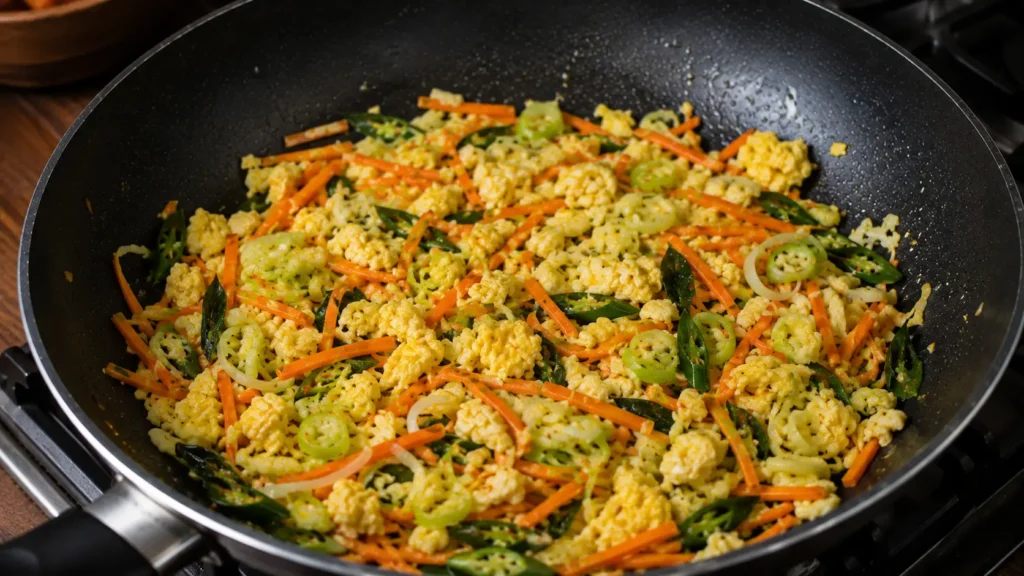
Add sliced carrots and cook for another 1–2 minutes.
Then add the leeks and mix well.
🥚 Step 6 – Add the Eggs
Add the beaten eggs into the pan and mix everything together until softly cooked.
🌶️ Step 7 – Season the Mixture
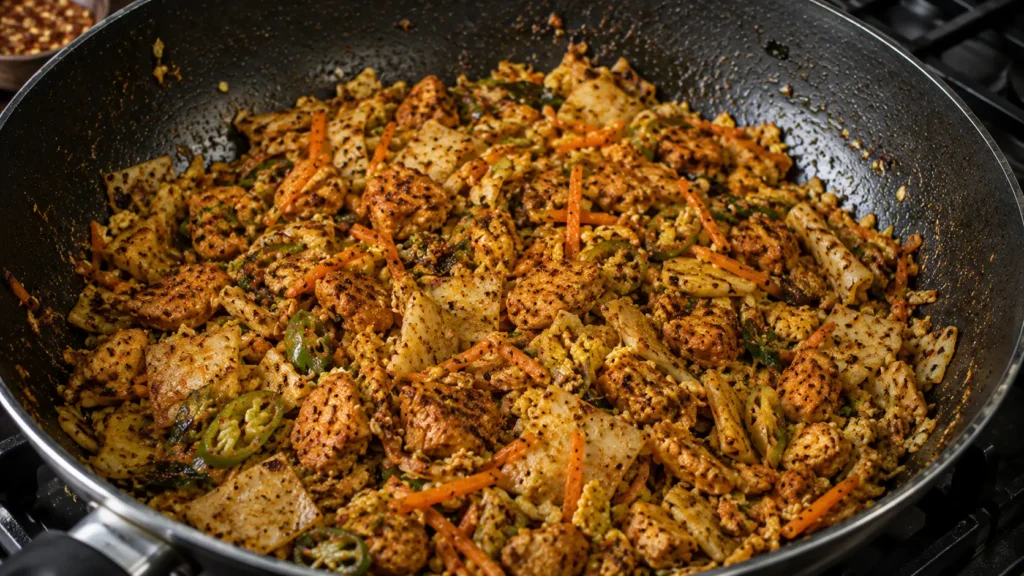
Add salt, chili flakes, pepper, turmeric powder, and chili powder if needed.
Adjust the spice level according to your preference.
Do not add too much salt at once because the chicken gravy already contains seasoning.
🍗 Step 8 – Add Chicken & Roti
Add the cut godamba roti pieces and fried chicken into the pan.
Mix everything together well over medium heat.
🥘 Step 9 – Finish with Gravy
Add a small amount of chicken gravy and mix well.
Do not add too much gravy — kottu should stay slightly dry, not soggy.
I usually serve extra gravy on the side instead.
Once everything is mixed properly, taste and adjust salt or spice if needed.
Serve hot immediately ❤️
💡 Tips for Better Chicken Kottu
• Frying the chicken separately gives better flavor
• Avoid adding too much gravy
• Thinly sliced vegetables cook more evenly
• Let the roti rest properly before cooking for a softer texture
• Pepper gives a more authentic Sri Lankan kottu flavor
🍽️ Serving Ideas
Chicken kottu tastes even better with:
• Extra chicken gravy on the side
• A spicy curry
• Chilled Homemade Ginger Beer
• Sri Lankan Wambatu Pahi curry
For another crispy homemade Sri Lankan snack, you can also try my Easy Sri Lankan Fish Patties recipe.
🌿 About Chicken Kottu
Kottu roti originated in Sri Lanka and has become one of the country’s most recognizable street foods. Today, it is enjoyed not only by locals but also by tourists visiting Sri Lanka.
The rhythmic chopping sound of kottu being prepared on a hot metal griddle is something many Sri Lankans remember fondly. It’s more than just a meal — it’s part of Sri Lankan street food culture.
⚠️ Common Mistakes to Avoid
• Adding too much gravy can make the kottu soggy
• Overcooking the vegetables removes their texture
• Thick roti makes the kottu heavy instead of soft
• Too much salt can overpower the flavor quickly
✨ Final Thoughts
Homemade chicken kottu is one of those meals that always feels comforting and satisfying, especially when served hot straight from the pan.
What I personally love most is being able to control the spice level and ingredients while still getting that authentic Sri Lankan kottu taste at home ❤️
If you try this recipe, feel free to save it for later and share it with someone who loves Sri Lankan street food.
Did you enjoy this recipe?
If you enjoyed this recipe, don’t forget to rate it ⭐ and share your experience!