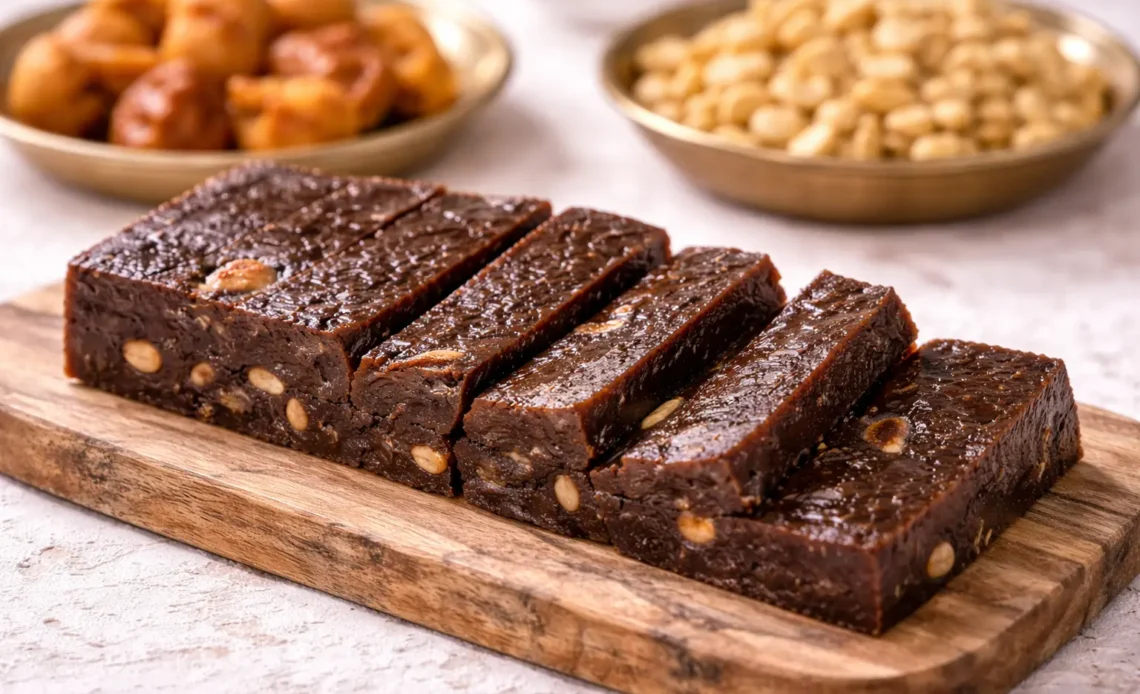
Sri Lankan Kalu Dodol is one of the most loved traditional sweets in Sri Lanka, especially during festive seasons like Sinhala New Year. This rich, dark sweet is commonly prepared for special occasions. Made with coconut milk, jaggery, and rice flour, this sticky and chewy delicacy represents the authentic flavors of Sri Lankan cuisine.
From my experience, making dodol at home is not just about the taste — it’s also about the process and the tradition behind it. I personally always use Kithul jaggery (palm jaggery), because it gives the dodol a richer and more distinct Sri Lankan flavor.
If you enjoy traditional sweets like this, you might also love mung kevum, another classic Sri Lankan treat that is often made for festive occasions.
Ingredients Required
The ingredients needed for this recipe are simple, but using high-quality ingredients makes a big difference in the final result.
- White rice flour (kakulu hal piti): 350g
- Thick coconut milk: 3 liters
- Jaggery (preferably kithul/palm jaggery): 900g
- Brown sugar: 250g
- Cardamom pods, crushed: 12
- Cashew nuts: 200g
- Salt: 1 teaspoon
Helpful Ingredient Swaps
If you cannot find some traditional Sri Lankan ingredients, here are a few simple alternatives you can try:
- Kithul jaggery → Dark brown sugar or palm sugar
- Fresh coconut milk → Canned coconut milk
- Roasted rice flour → Store-bought fine rice flour
- Cardamom → Ground cardamom powder
These substitutions may slightly change the traditional flavor, but the dodol will still taste rich and delicious.
Step-by-Step Preparation Method for Sri Lankan Kalu Dodol
1. Prepare the Ingredients
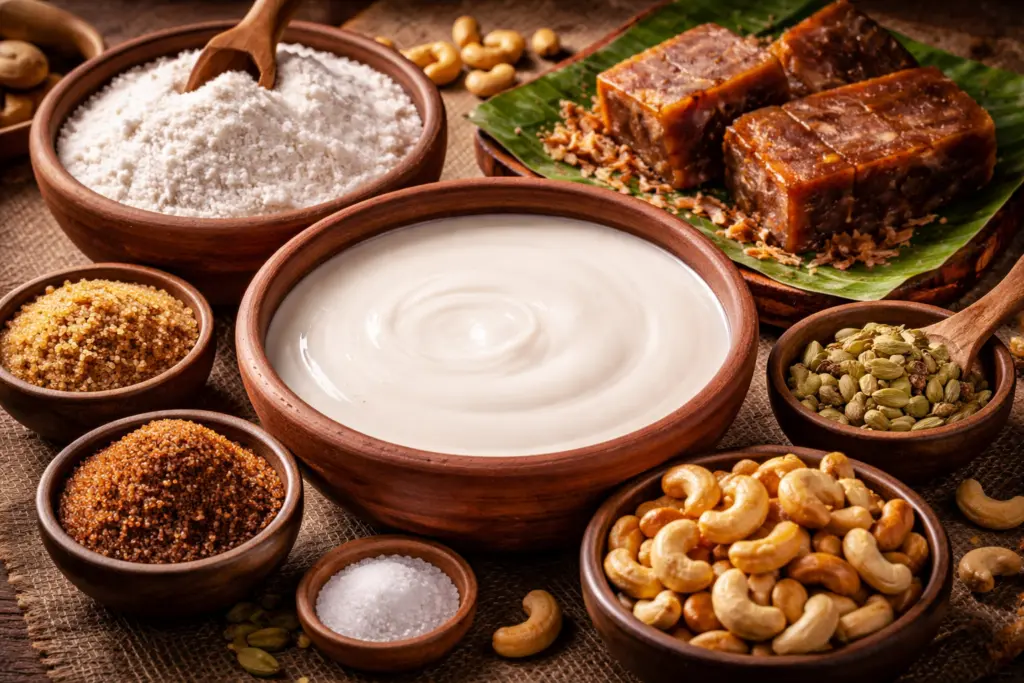
- White rice flour (kakulu hal piti): 350g
- Thick coconut milk: 3 liters
- Jaggery (preferably kithul/palm jaggery): 900g
- Brown sugar: 250g
- Cardamom pods, crushed: 12
- Cashew nuts: 200g
- Salt: 1 teaspoon
2. Prepare the Rice Flour Mixture
- Reserve 500ml of coconut milk for later use
- Mix the rice flour with the remaining coconut milk (2.5 liters)
- Make sure the mixture is smooth and well combined
- Strain through a fine sieve to remove lumps
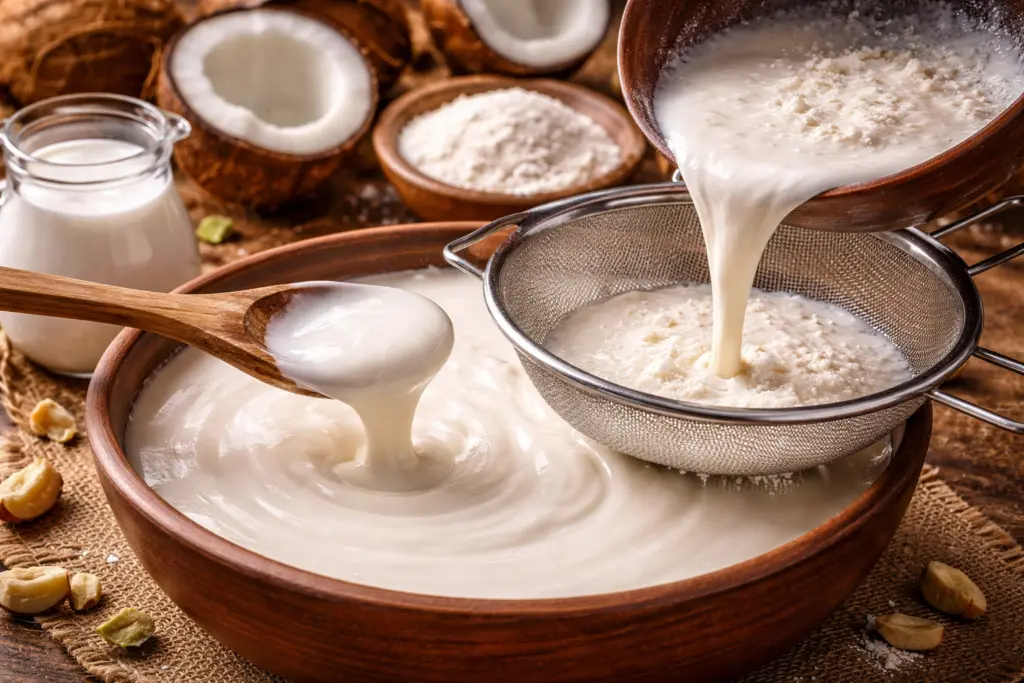
Pro Tip: Use well-matured coconuts for richer coconut milk
3. Prepare the Jaggery Base
- Use the reserved 500ml coconut milk to dissolve the grated jaggery
- Mix well — small lumps are okay, but larger pieces should dissolve completely
- Add the brown sugar and stir until dissolved
- Place on medium-low heat and stir until everything is fully dissolved
4. Combine and Start Cooking
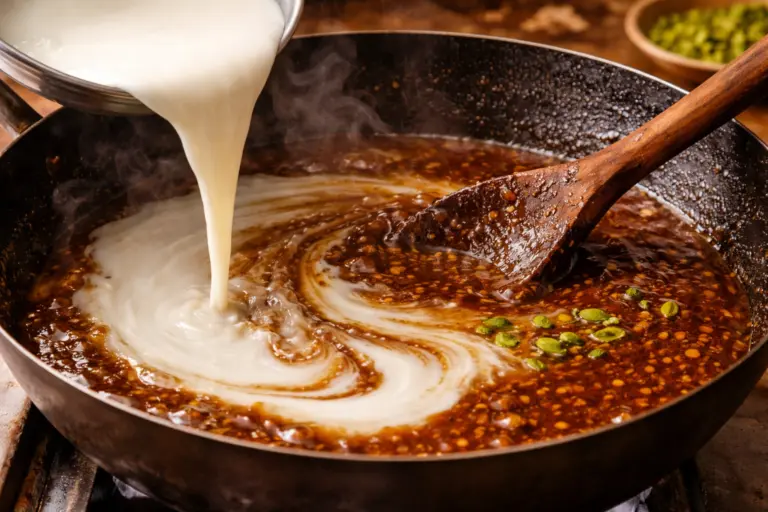
- Add the strained rice flour mixture to the jaggery base
- Important: Stir the rice flour mixture well before adding, as it can settle at the bottom
- Add salt and crushed cardamom
- Increase heat to medium and begin continuous stirring
5. Long Cooking Process
- Stir continuously using a wooden spoon
- After about 30 minutes, the mixture will start bubbling
- Safety Warning: Keep a safe distance from the pan during this stage
- Continue stirring for about 2–3 hours
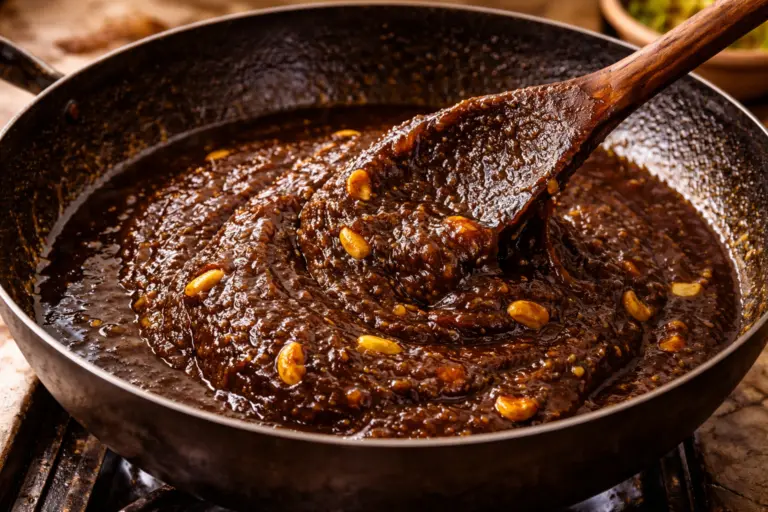
6. Check if It’s Ready
The dodol is ready when:
- It becomes thick and does not stick to the sides of the pan
- Oil starts to separate
- The wooden spoon leaves clear tracks
- The mixture forms a single mass
7. Final Steps
- Add cashew nuts when the mixture is almost done
- Remove excess oil from the surface
- Once it separates easily from the pan, remove from heat
- Transfer to a greased plate or tray
8. Setting and Cutting
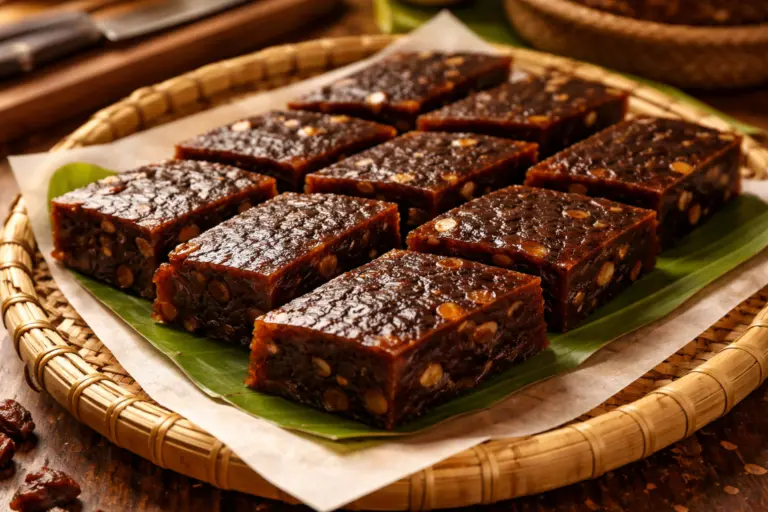
- Let it cool at room temperature for 6–7 hours
- Once set, cut into desired shapes
- Squares, diamonds, or rectangles can be used
Nutrition Information (Approximate)
- Calories: 180 – 220 kcal
- Carbohydrates: 30g – 35g
- Sugar: 18g – 22g
- Fat: 6g – 9g
- Protein: 1g – 2g
Note: These values are approximate
💡 Extra Tip
Kalu dodol is rich in energy and natural sugars, so it’s best enjoyed in moderate portions.
- Heat Management: Maintain medium heat
- Stirring Technique: Use a figure-8 motion
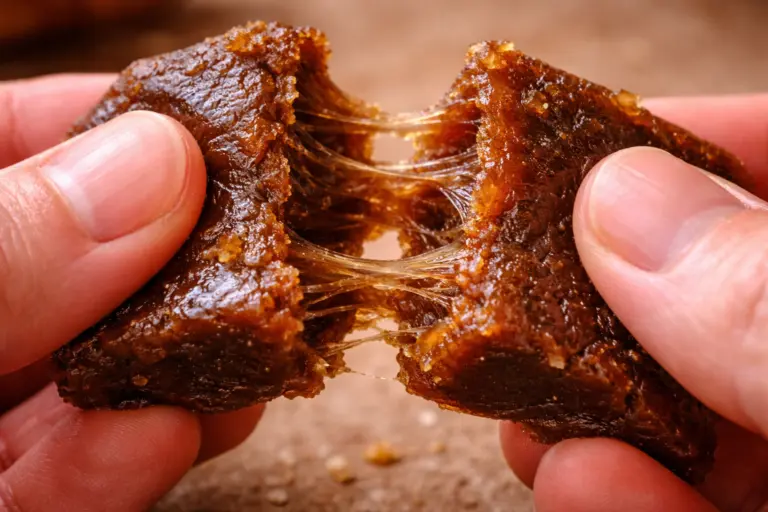
- Consistency Check: The dodol should hold its shape when cooled but remain chewy, not hard.
- Consistency Check: It should hold shape but remain chewy
- Storage: Store in an airtight container
The dark color comes from the slow caramelization of jaggery and coconut milk during the cooking process.
Although making dodol requires patience and continuous stirring, the process is not overly complicated. The key is maintaining consistent heat and stirring to prevent burning. This recipe yields approximately 2.5 kg of delicious kalu dodol.
Cultural Significance
Kalu Dodol is an important traditional sweet in Sri Lankan households, especially during the Sinhala New Year season.
Making dodol is often a family activity where everyone joins together. It is not just food — it is a traditional experience that strengthens family bonds.
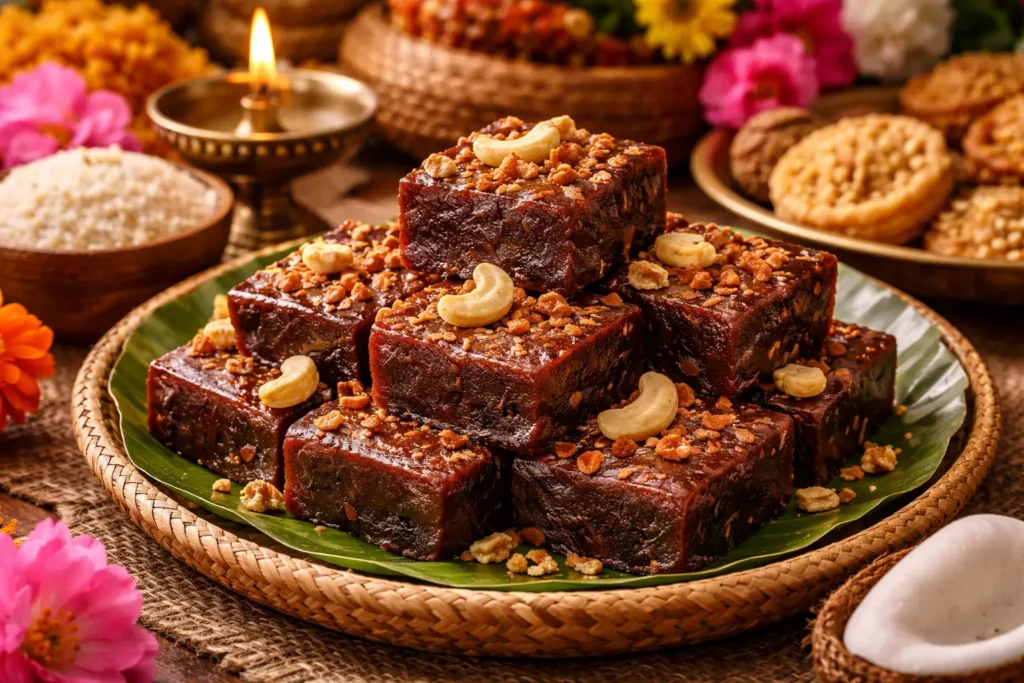
The dark color represents prosperity and good fortune. Another easy dish I make is the coconut toffee recipe, which can be used for New Year’s Eve, festivals, and any time.
🔥 1. Common Mistakes
- Too soft: Continue cooking
- Too hard: It has been overcooked
- Sticking: Caused by insufficient stirring
- Grainy texture: Jaggery not fully dissolved
🔥 2. How to Store Dodol
- ✔ Store in an airtight container
- ✔ Lasts 3–5 days
🔥 3. Variations
- ✔ Cashew dodol
- ✔ Sugar version
🎯 Conclusion
This recipe is based on my personal experience and traditional methods. Making Kalu Dodol requires patience and dedication.
I still remember the first time I made this at home — it took some time, but the final result was completely worth it. Try this recipe and don’t forget to share your experience. If you like traditional sweets, try our Rulang Aluwa recipe.
FAQ
- How do I know when dodol is ready?
- The mixture becomes thick and separates from the sides of the pan
- Why is my dodol too soft?
- It has not been cooked long enough
- Can I store dodol?
- Yes, store it in an airtight container
Did you enjoy this recipe?
If you enjoyed this recipe, don’t forget to rate it ⭐ and share your experience!