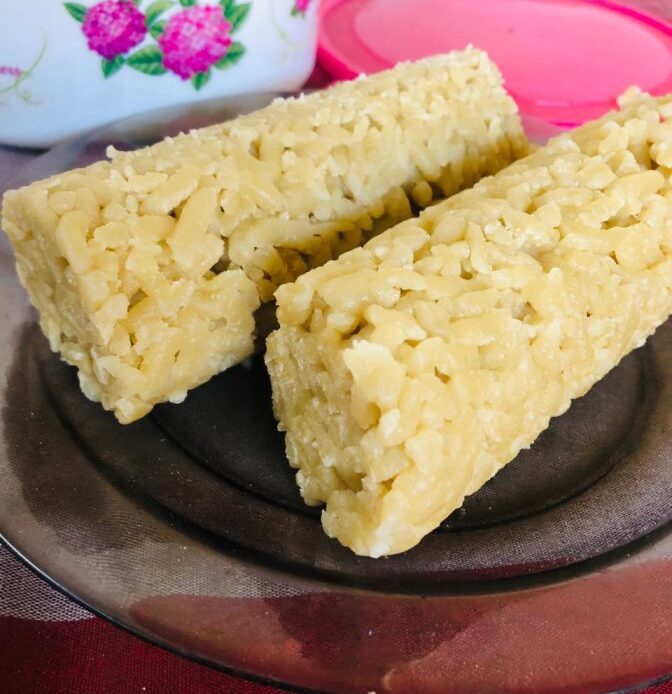
This is one of my favorite meals, and I made it again after a long time. When we say mani pittu, it’s hard to find someone in Sri Lanka who doesn’t know it or hasn’t tried it. It’s a very popular and tasty dish, and it doesn’t cost much to make.
Mani pittu is made by steaming flour (wheat flour, rice flour, or kurakkan flour). You can’t really eat it alone — it tastes best with a well-made curry. I usually enjoy it with a thick egg, chicken, or fish curry.
When I was younger, I used to eat it with coconut milk, sugar, and banana. If you prefer a sweet version, you can try it this way too. It’s especially good for kids who don’t like spicy food.
If you like mani pittu, you can also try my chicken curry recipe which goes really well with it.
Types of Pittu
Pittu is not limited to just one type — there are many variations. I made mani pittu, but the taste and nutrition can change depending on the flour used. Here are a few types for you to know:
- Wheat pittu
- Kurakkan pittu
- Sweet potato pittu
- Red rice pittu
- Manioc pittu
- Special pittu variations
These are just a few examples. Some of these are my own ideas as well. I’ll be sharing more recipes in the future.
Ingredients for Mani Pittu
- Flour (wheat flour, rice flour, or kurakkan flour — your choice)
- A little salt
- Some coconut milk
How to Make Mani Pittu
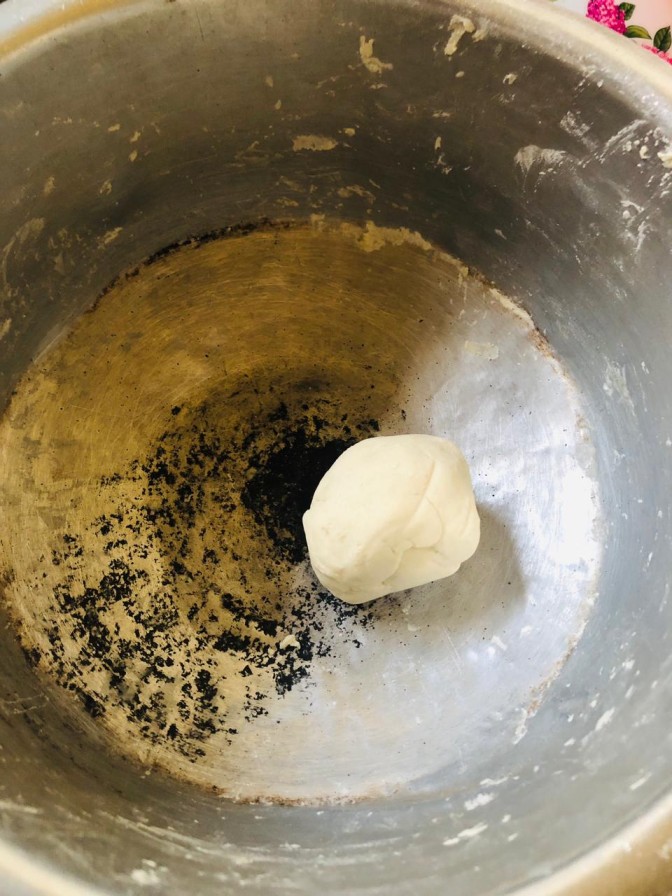
- Lightly roast the flour until you get a nice aroma. Do this on low heat and don’t let the color change too much.
- You can also steam it, but from my experience, roasted flour gives a better taste.
- Add salt to the flour and mix with water until it reaches a texture similar to string hopper dough — not sticky to the hand.
- Spread the mixture on a banana leaf or parchment paper.
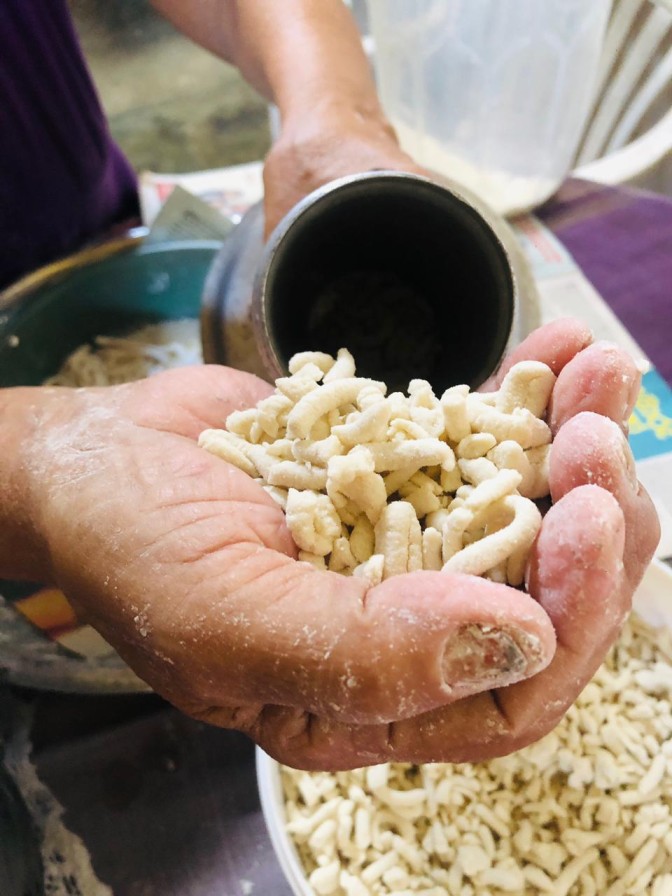
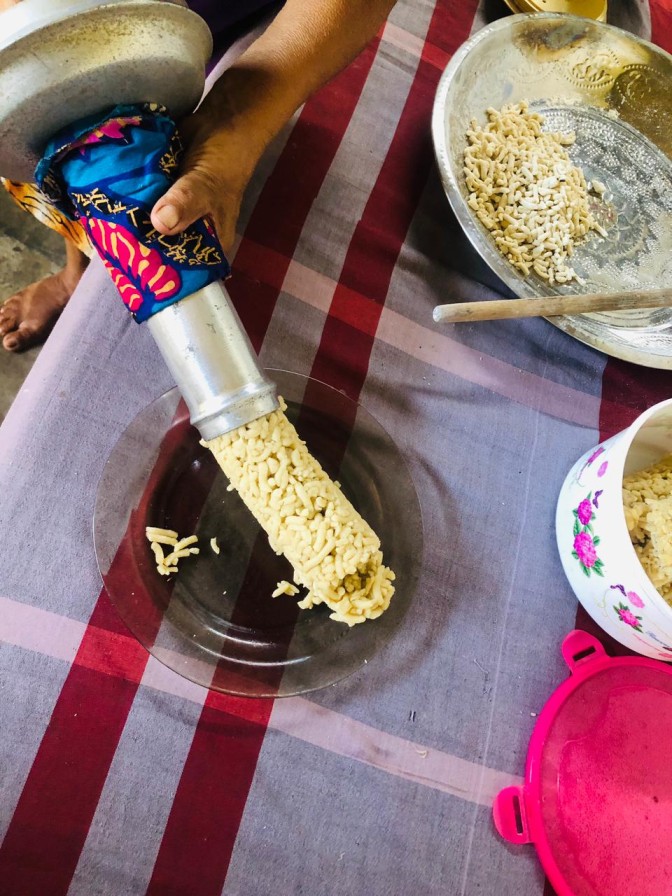
- Use a string hopper maker with slightly larger holes and press it out in long lines instead of round shapes.
- That makes it easier.
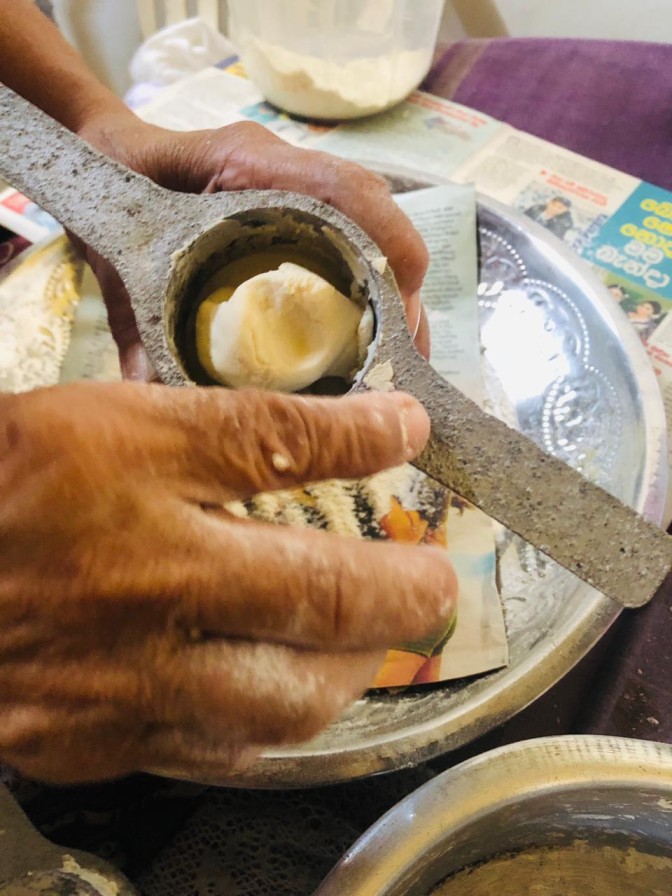
- Sprinkle some flour on top again and gently break it into small pieces using a spoon handle.
- Don’t make the pieces too small.
- Use a sieve to remove excess flour.
- During this process, the pittu pieces will form nicely.
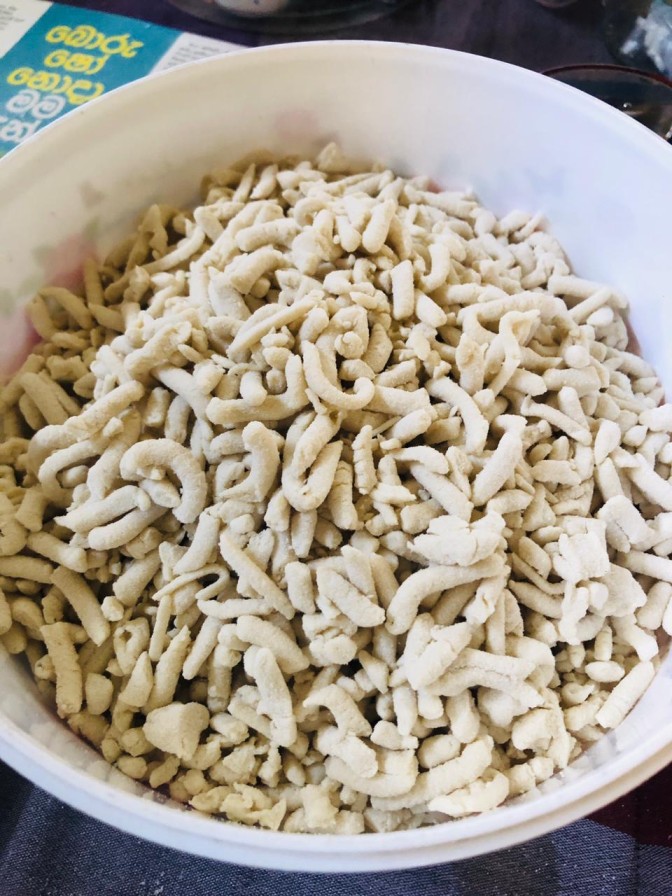
- Add the pieces into a pittu steamer and steam for about 15 minutes.
- Add thick coconut milk so it spreads evenly through the pittu.
You can pair this with a simple egg curry or fish curry depending on what you prefer.
My Experience with Mani Pittu
- Traditionally, mani pittu doesn’t include coconut, but I like to add a little coconut to the mixture — it tastes good that way too.
- In the original recipe, coconut is not added.
- Most people use wheat flour for mani pittu.
- I used rice flour.
Tips for Perfect Mani Pittu
- If you roast the flour, mix it with warm water. Otherwise, you can use hot water.
- If you don’t have a pittu steamer, you can use a regular steamer.
- Don’t over-roast the flour.
- Don’t add too much water when mixing.
- When shaping into lines, sprinkle flour before and after to prevent sticking.
- Don’t make the pieces too big or too small.
Conclusion
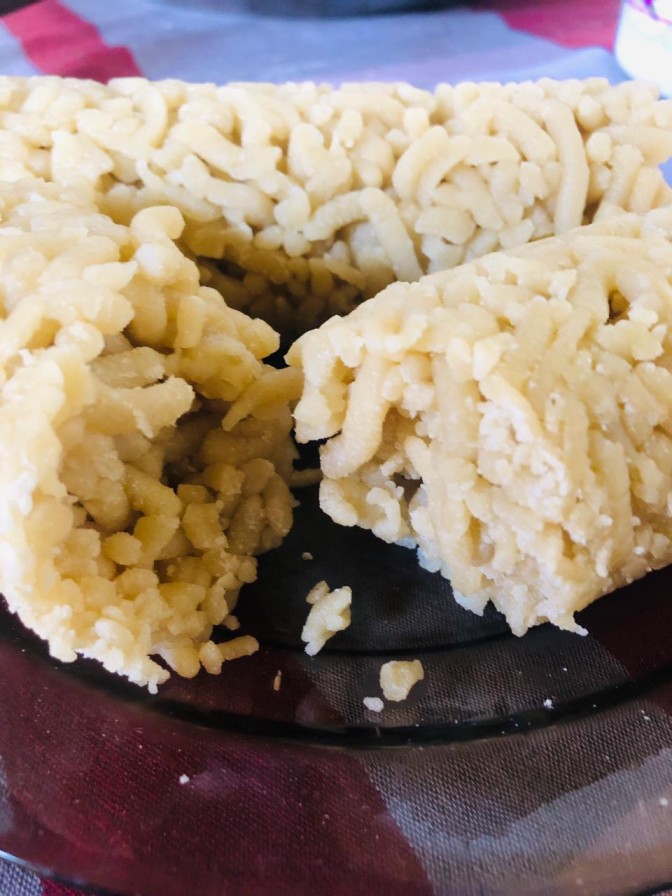
I made pittu for dinner today. It’s very easy to prepare and also very tasty. It doesn’t cost much and saves time too. I had it with a thick egg curry, and together it tasted amazing — one of my favorite combinations.
If you’re looking for more curry ideas, you can explore other curry recipes on the site.
FAQ
- How to make mani pittu soft?
To make pittu soft, make sure not to add too much water when mixing the flour. Also, steaming it properly with coconut milk helps keep it soft.
- Can I store pittu in the fridge?
Yes, you can store pittu in the fridge for 1–2 days. Before eating, steam it again or heat it lightly to bring back the softness.